|
|
Local Hawaii ingredients used with an international flair^BNanette^K^H (Gone but not forgotten) 1946-2020 Email: nanette@freerangegourmet.com Thursday, January 19, 2017How to enjoy Hawaii fish that is free from the taint of slave labor
by Larry Geller Tonight we’re going to enjoy Hawaii-caught fish that is completely traceable—so that we know that we won’t be feasting at the expense of trafficked foreign fishermen. Eliminating human trafficking: laws are a beginning but must be enforcedFour months after the Associated Press revealed near slave labor conditions aboard some ships in the Hawaii longline fishing fleet, nothing has changed. The practice of employing foreign fishermen who cannot set foot in Hawaii to ask for help, to complain, or to seek medical treatment or who may be forced to work long hours in unsafe conditions continues. It is possible that the Hawaii State Legislature may take action this session intended to help eliminate human trafficking and near slave labor conditions in the fleet. West Hawaii Today posted a report on the start of the legislative session that includes this possibility.
A properly designed bill could turn the tide (sorry) on this issue, but even passage of a new law would not be reason to declare victory over this form of oppression, which has embarrased the state nationally and internationally in the media. There already is a state law (HRS §189-5) prohibiting the licensing of the foreign fishermen, but the state has chosen not to enforce it. While a legislature can pass laws, it is up to the administrative branch of government to enforce those laws. Hawaii’s Department of Land and Natural Resources has so far been unwilling to enforce the laws already on the books. We subscribe to a CSF (community supported fishery) that works like the more familiar CSA (community supported agriculture) economic model in that customers purchase shares and pick up their fish at designated points around town each week. Last week’s fish from Local I'a was ahi, and this week’s is aku. Each bag of fish is labeled with a number and a QR code that can be used to trace the fish and verify that it is sustainably caught. Here’s a screenshot of some of the info for last week’s fish: Information includes the species of fish, who caught it, and where it was harvested, landed and processed. There’s more information for the clicking: Clicking further yields information on the person who caught the fish and on how it was caught:
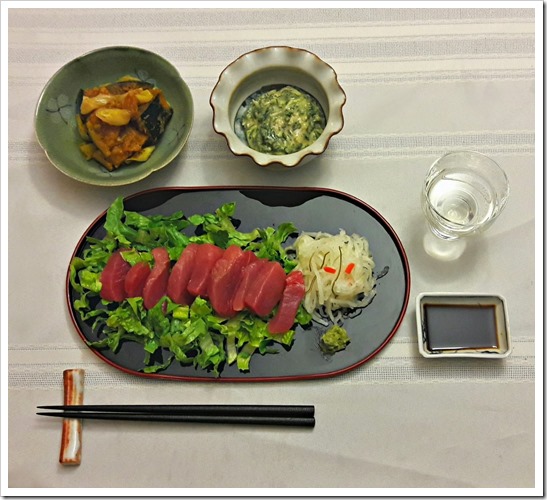
The technology exists to trace any fish, even those caught within the longline fleet. Of course, the Hawaii Fish Auction would not do well if it was revealed that much of their fish is caught under questionable circumstances. So don’t expect your fish to have QR codes on ‘em any time soon—unless you buy them via a CSF. I can’t end this article without at least some snapshots of how Nanette prepared the ahi. The fish share was large enough for three meals for the two of us. We started out with ahi sashimi on the day she picked up our share. Here’s the pic:
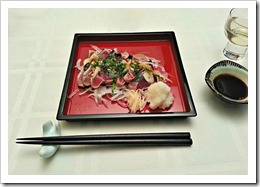
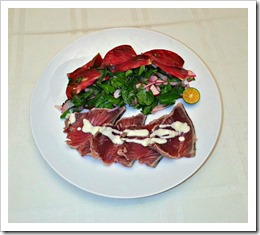
And two preparations of aku (katsuo) from last year:
Permalink
posted by Larry @
1/19/2017 06:44:00 PM
; 0 comments - add
your
comment

Wednesday, August 20, 2014Another good reason to push for GMO labeling: Fake DNA Frankenfood will be next on our plates“ by Larry Geller And what could possibly go wrong with creating glowing trees to replace streetlights?
“Synbio” is supposed to sound better than “Frankenfood,” unless, of course, you know that’s what it means. Check out the article. It appears that “synbio” vanilla is here, and could be appearing in food soon.
As the article points out, the products targeted are currently grown the old-fashioned way by farmers, mostly in the global South. If factories in the North are churning out the stuff they used to grow, what will they do for a living? Since consumers in this country haven’t yet won the war to have GMO foods labeled, there likely won’t be labeling required for Frankenfoods, either. Unless we get our act together real soon.
Permalink
posted by Larry @
8/20/2014 04:55:00 PM
; 0 comments - add
your
comment
Wednesday, June 19, 2013Will it be times of famine or an age of plenty? IEEE Spectrum thinks the latterby Larry Geller Good grief—an engineering magazine has produced a food issue.
The IEEE Spectrum underwent a transformation some time ago into very much a general-interest technical magazine. In other words, although it still has an engineering slant, you don’t need to have an engineering degree to understand and appreciate most of the articles. So I wasn’t totally surprised that they did a food issue, although I’ll admit to initially being taken aback by the “Age of Plenty” theme. Heck, isn’t it common wisdom that food famine is on the way for much of the world, as the climate worsens and the population continues to increase? The mail takes a while to arrive in Hawaii, and my issue just came, so I haven’t digested very much of it. But if you’re interested in food, food security, or food technology, you’ll find that this magazine is on a different tack from others. Have a look—they are also very good about posting their articles on-line. Read them here.
Permalink
posted by Larry @
6/19/2013 11:58:00 AM
; 0 comments - add
your
comment
Tuesday, August 21, 2012Breaking the Safeway seltzer monopolyby Larry Geller It’s been frustrating all these years—buying Safeway seltzer in the 2-liter bottles because there is no alternative in Hawaii. Safeway seems to have a monopoly on seltzer. And over the past year or so, the price has crept up and up. Why not, given monopoly power? What was under a dollar is now $1.50. Cost of transportation doesn’t account for it, nor does the cost of ingredients—which is close to zero. Even worse has been the guilt around buying it at all. Somewhere on the Mainland they fill large plastic bottles with plain water, add a little gas to it, and ship it across the Pacific to Hawaii. Then gulp, gulp, it’s gone, except for that &#$@ bottle, which we carry off to the recycling bin. Oh, how bad we have been. No more. There’s a way to make seltzer at home, but due to problems shipping compressed gases, it had not been possible in Hawaii.
This weekend, by chance, I learned that Bed Bath & Beyond carries several SodaStream models and will exchange depleted gas cartridges for filled ones. Each cartridge makes 60 liters of seltzer. In a flash, we were off to the store, where helpful sales staff answered our questions about the SodaStream. It costs a bit more than it would on the Mainland because they have had to arrange for special packing in containers to ship the gas cartridges both ways by sea. Still, we are way ahead in terms of costs. Two liters would come to about 67 cents, not a dollar fifty. This doesn’t include the amortized cost of the unit, but that should last quite a while. Since the unit itself costs $100, the break-even point is after three gas cartridges are used, which won’t take too long. But more important: our carbon footprint is greatly improved. The guilt is gone (or will be when we finish the last of the Safeway seltzer still on hand). The SodaStream unit comes with flavor packs to be added after fizzing. People say the stuff tastes good, but we don’t drink sodas, so we’ll give those away.
Permalink
posted by Larry @
8/21/2012 05:35:00 PM
; 0 comments - add
your
comment
Tuesday, August 07, 2012Are eating insects a win-win solution, or has the BBC finally gone bonkers?“Insects, or mini-livestock as they could become known, will become a staple of our diet, says [food futurologist Morgaine] Gaye. It's a win-win situation. Insects provide as much nutritional value as ordinary meat and are a great source of protein, according to researchers at Wageningen University in the Netherlands. They also cost less to raise than cattle, consume less water and do not have much of a carbon footprint. Plus, there are an estimated 1,400 species that are edible to man.” by Larry Geller Mini-livestock?? Could it really happen that we would be eating insects in the future? Heck, we’re eating some now (don’t click the link before breakfast).
Stop right there, BBC. Insects may be a great source of protein, but ask yourself: will the Queen indeed be eating insects in 20 years time? Probably not. I need to set you straight. Here’s the sidebar from your article headed “Foods we used to eat”.
Who’s the “we?” in this? People make an assumption, when they look at the “good old days” of times past, that if they could go back in time, they’d be a member of the upper class. The odds are strongly against it. Going back to Tudor times, while the noble class might have feasted sumptuously on spit-roasted dolphin, you might have been a scullery maid scraping pots in the kitchen, or one of the riff-raff huddled outside the servants’ door hoping it would open so you could catch a few of the scraps thrown out for the poor. Times were hard for most, although clearly not for Henry VIII and his peacock sandwiches. So I submit that neither the Queen or many sitting in the House of Lords will be breakfasting on locust omelets no matter how far into the future you dare to peer. Peer is the key word, dear chaps. They’ll still snack on peacock, heron, porpoise and seagull if they wish to consume those, not wasps and weevils because peacock prices have gone through the roof. Forget peacocks, let’s get back to the insects. We already eat insects. There are a couple of articles on the web like this one: How Many Insect Parts and Rodent Hairs are Allowed in Your Food? More Than You Think ... and Maybe Than You Want to Know! (sixwise.com, 6/29/2005). At some point we could, if we wish, contemplate how many pounds of insects we already consume each year unknowingly. I’m also reminded of the rumor we heard as kids that a certain chocolate syrup, essential in New York City to the proper creation of a drink called the Egg Cream (containing no eggs or cream), derived its special flavor from a unique blend of, um, insect parts. I don’t care about the rumor, it really is the only chocolate syrup that does the job. If we were consuming insects, so be it. I do miss my egg creams. In Mexico I was served grasshoppers by my hosts and the little buggers were delicious. Maybe I was being tested. Little did they know that I’d been immunized by my diet of frequent chocolate egg creams. Enough. What of the future? As the film Soylent Green highlighted, while the burgeoning population was fed wafers, the moneyed classes still had their carrots, though they were well guarded to keep them out of the hands of the masses. Clearly, if they could get but a single taste of a carrot, they would no longer be content with their fodder. The 1973 film was set in the year 2020, now just around the corner, but neither universal wafers nor insect meal are likely to appear over the near horizon. Well, maybe insect meal… some healthfood nuts will eat anything. While consuming insects might make sense economically and nutritionally, it is hard to see how the cultural resistance can be easily overcome. So will it take USDA oversight (meaning, not looking) to first increase the allowable proportion of insects in ordinary food to incorporate more bugs into the American diet? I can’t see millers shoveling bales of locusts into the wheat grinders, at least for fear of discovery. Not that they wouldn’t if they could get away with it. On the other hand, do you really know what’s in your orange juice (you didn’t click the links above, did you)? Simply by doubling the current thresholds, insects could make a foothold in our diet. Short of falling into abject poverty, Americans will not be digging grubs for their dinner. No, I don’t agree with the BBC that any of this is going to happen anytime soon. Unless the Republicans get charge of the economy, that is.
Permalink
posted by Larry @
8/07/2012 02:28:00 PM
; 0 comments - add
your
comment
Friday, June 29, 2012Try Singapore kaya breakfast at Pig and the Lady at the KCC Farmers Market Saturdayby Larry Geller I first visited Singapore in December 1971, to canvas local GE managers on the possibility of using GE’s time sharing services. The job was made infinitely more difficult, as it turned out, because while I was in the air enjoying Singapore Airlines hospitality (and great meals!—they even sell a cookbook), President Nixon had floated the dollar, and so the overseas operations took an immediate hit on their bottom line. Each of my appointments the next day was punctuated by the sounds of teeth gnashing or outright cries of anguish. And they ended quickly. The managers had other things on their mind. So I was able to escape several times during the day to explore Singapore and check out the food, which I had only read about. I also managed to escape the mad cab drivers who delighted in playing chicken by aiming at pedestrians stepping off the curb on Shenton Way. There is an incredible variety of food served up in that tiny island city-state, and during a cab ride across town (the cabs were not air conditioned then), the aromas switched from the spices of India to Malaysia to China over and over again. It was a short visit, but when I next returned in 1974 I was ready to scarf up everything in sight. I knew that Singapore was serving up my kind of food.
Although I always stayed at the Shangri La Hotel, where the food was top notch, I usually would escape in the early morning to find something local to eat. The streets are busy before sunrise on any day. The days, by the way, are all the same—the sun rises and sets at almost exactly the same time all year round. Any variety is what you make of it. One day Indian food, one day Chinese, one day Malaysian, and so forth. Each category is further subdivided. Chinese came to Singapore from so many provinces that even the variation of “Chinese” food is staggering. Pig and the Lady is offering a simple but elegant egg dish along with Kaya toast. Check out the explanation at the link. They serve it with Vietnamese ice coffee. In Singapore, most typically coffee would be served with condensed milk so thick that you could –literally– cut it with scissors while it is pouring. In fact, that’s what happened one day as I visited my favorite tailor to pick up a suit. While we talked, one of the staff poured out cups of coffee, then added condensed milk from a can held high above the table, cutting off the stream with a tailor’s scissors each time, then going on to the next cup. I was thinking: usually we might measure liquids by the ounce or milliliter, perhaps, but he was measuring the milk by the inch. Anyway, I digress. Just thinking of Singapore food brings back memories. Having some tomorrow should transport me back in time and space. If you see this in time, try out the Singapore Breakfast or one of the other Pig and the Lady dishes at the KCC Farmers Market. Be warned, though, their cooking is addictive. You’ll be back again. And again. And again.
Permalink
posted by Larry @
6/29/2012 10:27:00 PM
; 0 comments - add
your
comment
Sunday, June 24, 2012Report: studies show that GMO crops have harmful effects on laboratory animals and on the environment
“One of the report’s authors, Dr. Michael Antoniou of King’s College London School of Medicine in the UK, uses genetic engineering for medical applications but warns against its use in developing crops for human food and animal feed.”—Nation of Change
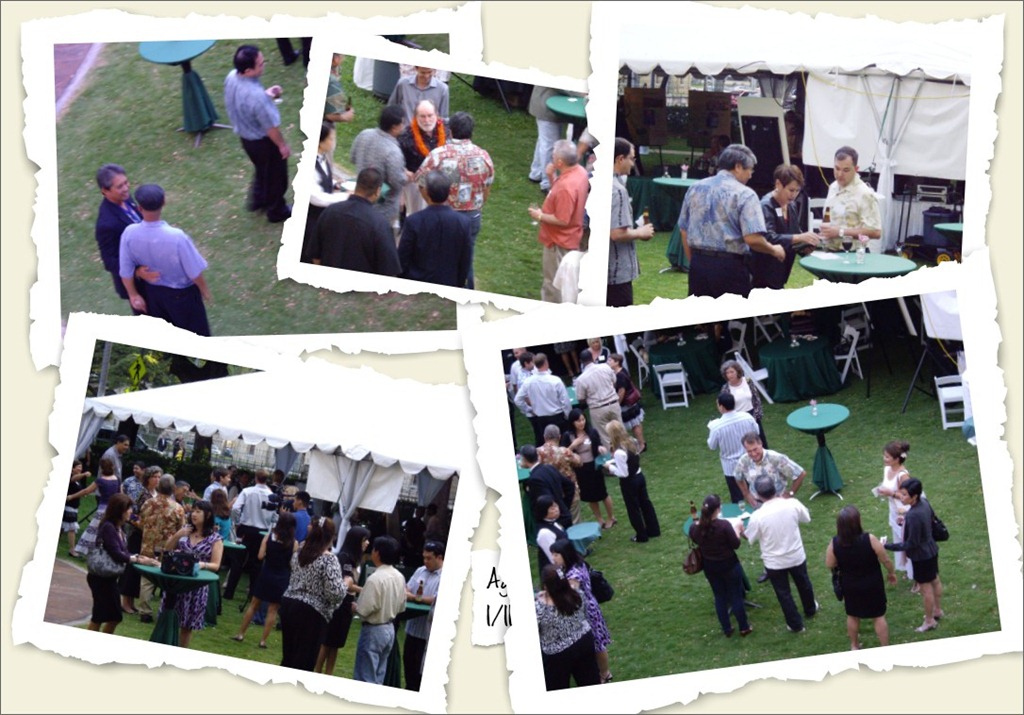
by Larry Geller A 123-page report released this month will not please Hawaii’s pro-GMO lobby: GMO Myths and Truths: An evidence-based examination of the claims made for the safety and efficacy of genetically modified crops. Hawaii is a major source of GMO seed crops, and that brings with it a cadre of well-paid lobbyists. Here’s my photo album for a shindig thrown for state legislators on the grounds of the Hawaii State Art Museum on January 11, 2012. The culinary extravaganza was staged by the Hawaii Farm Bureau and the Hawaii Crop Improvement Association. In addition to those two organizations, several big gun lobbyists were present. The lavish event itself was controversial due to an initial Ethics Commission challenge. (click for larger)
The GMO report itself is here. Right-click and save, or read it on-line.
[Nation of Change, Genetic Engineers Explain Why GE Food is Dangerous, 6/24/2012 ]
Permalink
posted by Larry @
6/24/2012 07:49:00 PM
; 0 comments - add
your
comment
Thursday, June 14, 2012Tuesday night KCC farmers market opensby Larry Geller Tuesday June 12 was the first day of the new KCC Tuesday Farmers Market, 4-7 p.m. at the same location (Kapiolani Community College Diamond Head Road parking lot) as the wildly popular Saturday market. While the Saturday market has become a tourist destination, which discourages some local shoppers who prefer a quieter experience, Tuesday should be more relaxed. The tourists are probably off enjoying their luaus, leaving the kale and the mangos to be discovered by us locals. There were far fewer vendors when compared to the rambling Saturday market, but the number should increase. All the essentials are there, though one could wish for more organic produce. There’s also a row of prepared foods to consume on the spot or to take home for dinner. Compactness has its advantage. Like the Wednesday market at Blaisdell, it’s very possible to park, shop quickly, and get back on the road headed for home.
Danny Kaleikini opened the market with a blessing. Towards the left are the best pineapples you can find, sweeter than store-bought and starting at $2 each.
If you’ve seen one bunch of kale you’ve seen ‘em all, but what caught my eye was this display at the Hawaiian Cheesecake tent. Too bad I had just succumbed to a lilikoi ice cream cup at Cold Fyyre. I mean, dinner was yet to come and two desserts would be... hmmm... should have done it anyway.
The cupcakes are not only works of art, but David Bearden makes them starting with a mac-nut shortbread base, followed by a layer of Waialua Estate dark chocolate, David’s special cheesecake and a local topping. My favorite cheesecake flavor is the one at the top, lilikoi. Yes, I’m a sucker for passion fruit. But the topping only sets off the very best New York style cheesecake you can find in Honolulu. And here it was, tempting me at the Tuesday market. More info on the Tuesday KCC market can be found on the Farm Bureau’s website, here. Try come next week.
Permalink
posted by Larry @
6/14/2012 09:53:00 AM
; 1 comments - add
your
comment
Tuesday, April 17, 2012Health concerns mount after study shows chemicals quickly leach out into food from plastic packaging“In a study published last year in the journal Environmental Health Perspectives, researchers put five San Francisco families on a three-day diet of food that hadn’t been in contact with plastic. When they compared urine samples before and after the diet, the scientists were stunned to see what a difference a few days could make: The participants’ levels of bisphenol A (BPA), which is used to harden polycarbonate plastic, plunged — by two-thirds, on average — while those of the phthalate DEHP, which imparts flexibility to plastics, dropped by more than half.” by Larry Geller What to do? We’re eating organic wherever possible. Now, it seems, even chemical-free food can pick up chemicals from the plastic packaging it sits in on the store shelf.
Manufacturers are reluctant to tell food processors what chemicals are used or present in the packaging they rely on. The story relates Stonyfield Farm’s attempt to find out what chemicals might be in the a corn-based plastic they wanted to use for a yogurt product aimed at children. Check it out. For concerned consumers, avoiding packaging chemicals is not easy—but there is a partial solution: Instead of buying packaged products, buy fresh organically-grown produce at a local farmers market. Of course, some of it is still sold in plastic bags. Perhaps this is something to take up with the farmers. At least it will not have been in contact with the plastic very long. Now, I’m wondering about Zip-lock and similar storage bags…
Is this an over-reaction? It seems to be a growing concern, but one that won’t necessarily make it onto the pages of daily newspapers any time soon.
Permalink
posted by Larry @
4/17/2012 11:03:00 AM
; 0 comments - add
your
comment
Tuesday, March 06, 2012Iowa enacts laws to hide farm atrocities from viewby Larry Geller
Check out the full article, but warning: not before dinner. I’ll skip the hog part and jump to the chickens:
Permalink
posted by Larry @
3/06/2012 06:20:00 PM
; 0 comments - add
your
comment
Sunday, February 12, 2012Alternative to factory farming right here in HawaiiMany readers don’t look at comments, so I’d like to “promote” this comment, attached to the article At last–exploding pig poop explained (2/11/2012) by Malama Farm: Thank you for shining a light on the terrible conditions in factory hog farms. This type of revelation is what inspired us at http://www.MalamaFarm.com to prove out a model of gentle, kind and nurturing pig farming. We believe it is a privilege to eat meat, and we want to honor the lives of the animals. We have found that providing natural, clean conditions along with a diet of fresh vegetables, fruits and grains, and shunning vaccinations, antibiotics and growth hormones has led to larger, healthier litters and superior tasting meat. Most importantly, our pigs frolic in the sun, burrow their heads in fresh straw and roots, and cuddle with their littermates under rainbows and stars. We keep very low density operations and rotate our pigs regularly onto fresh pasture - this has created a wonderful cycle whereby the pigs' manure actually fertilizes the ground, helping the protein rich legumes and grasses grow and providing richer pasture for them on the next cycle. We consider ourselves "grass farmers" as much as pig farmers - because it all starts with the land. It really is possible to raise, buy and eat meat with a clear conscience - so please encourage your families, stores, restaurants and farmers to support this model of livestock farming. "The greatness of a nation and its moral progress can be judged by the way its animals are treated". Mahatma Gandhi
Permalink
posted by Larry @
2/12/2012 08:10:00 PM
; 0 comments - add
your
comment
At last–exploding pig poop explainedby Larry Geller At last, an explanation is in for the pig poop explosions at barns in the Midwest that have plagued commercial pig farmers. In the latest incident, 1,500 pigs died and one worker was injured in an explosion in September 2011 in a barn in Iowa. What? You haven’t been following this story? Are you a vegetarian or something? If not, you soon may be.
The image of pig poop foaming up to four feet high is bad enough. Where did it come from? Do I really want to know about this? In case you do, there is a great article in the University of Minnesota newspaper, The Minnesota Daily: Exploding hog barns beckon U researchers: A team is investigating foam that has caused Midwest swine barns to unexpectedly explode (2/7/2012). The professors understand the problem, and they have a solution:
In Minnesota, dirty hogs are apparently an issue. Spraying water probably helps with that too. Preventing the smudging has moved the investigation into high gear:
This sounds very plausible. They have not gone so far as to suggest that hog farm foam might be bottled as a gasoline additive, however. If you are on the edge of vegetarianism by now, this next article could push you over. It’s from Mother Jones: The Mystery of Exploding Pig Poop (2/9/2012).
Enough. It is possible to purchase pork that does not come from these factory farms. Or, it is possible to do without. If you are not yet convinced, please check out the Mother Jones article at the link above, or the Rolling Stone article, and then see how you feel about all this.
Permalink
posted by Larry @
2/12/2012 03:22:00 PM
; 1 comments - add
your
comment
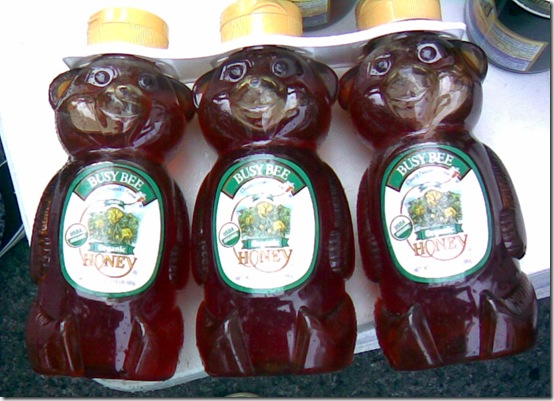
Saturday, November 19, 2011WTO ruling against country of origin labeling will screw Hawaii beekeepersby Larry Geller If you buy this honey at Costco, you are buying a product that appears to violate the USDA’s COOL (Country-of-Origin Labeling) laws. The honey doesn’t say where it comes from (see: Help stamp out illegal honey sales that hurt Hawaii beekeepers, 5/24/2011). You don’t know if is from China, for example, where the bees might be fed sugar water and the pollen might be filtered out. So it would be better to know, right? For one thing, the Costco honey is very cheap. It competes strongly with local honey. The lack of a legal label hurts Hawaii beekeepers because not only might customers prefer to buy local, they might prefer not to buy cheap honey from certain countries.
Well, forget COOL. The World Trade Organization has screwed consumers once again, and will harm Hawaii beekeepers:
The article indicates that the US can appeal. Will we? If consumers say nothing, no, of course not. We 99%ers need to do something about these trade agreements that benefit corporations and harm us in so many ways. Guess what—President Obama negotiated another while he was in Honolulu—the Trans-Pacific Partnership (TPP).. And he is still working on it at his meetings in Bali. The last thing you need to know about Obama’s negotiations is that he has no authority from Congress to engage in these talks. This was noted by, among others, the American Enterprise Institute, and I can’t believe I’m citing them:
So we need to understand that with regard to the damage that the TPP will do to American workers (job loss) and consumers (loss of protective rules and laws), it is Obama himself who is planning to screw us.
Permalink
posted by Larry @
11/19/2011 12:31:00 PM
; 1 comments - add
your
comment
Friday, September 09, 2011New market choices for farmers market fansby Larry Geller
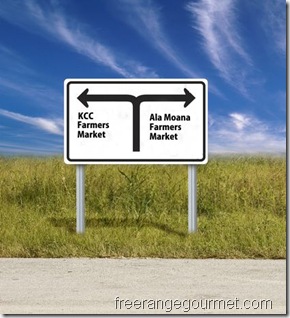
If you’re headed out to market tomorrow (Saturday), you have a choice. There are two new markets in addition to KCC Farmers Market. One is on the Sears parking lot at Ala Moana Center, the other is in Kakaako. The KCC Farmers Market hours are 7:30-11:00 a.m. Ala Moana will be open from 9 a.m. till 1 p.m. The Kakaako market, near Ilalo and Ahui Streets, will run from 9 a.m. until 2 p.m. Some vendors from KCC have moved to Ala Moana. Some are at both. So if your favorite vendor is no longer at KCC, drop by Sears on your way home and see if you find them there.
There’s one more market – at Kakaako. Checking into it after our visit to Sears, we found only a couple of lonely tents and no customers at all. I don’t hold out much hope for it, especially given the competition. Here’s a pic of the biggest part of it:
How will the market competition sort out? Time will tell. KCC Farmers Market is a popular tourist destination, but tourists don’t buy zucchini, they buy pizza, fried green tomatoes and other prepared food. Many of the vendors at the Sears location say that they hope local buyers will switch. Many of their favorites are already at Sears, including MA`O, North Shore Farms, Otsuji and others. But there will need to be more, and the newcomers might take a cue and get some little signs up with names and prices of their produce. Right now there’s plenty of parking at Ala Moana Center, so it’s very reasonable to do first KCC and then follow up at Sears if one of your favorite vendors has switched or has sold out of something you need. This is “eat local” month, and with the new choices, you have less excuse to be seen in a supermarket.
Permalink
posted by Larry @
9/09/2011 05:02:00 PM
; 0 comments - add
your
comment
Sunday, August 07, 2011Frisée at the farmers market means Salad Lyonnaise for dinnerby Nanette Geller
I haven’t seen frisée (curly endive) at the KCC farmers market for a couple of months, so I was delighted to find this gorgeous bunch yesterday at the MA'O booth. Since I’d also picked up fresh eggs from Blue Lotus, we were all set for one of our favorite meals, Salad Lyonnais – salad with bacon and eggs. Click here for details on some Free Range Gourmet variations, including vegetarian and vegan versions.
I keep thick-sliced bacon in the freezer and cut off what I need. Tightly wrapped, it keeps well for a couple of months. It’s easy to cut crosswise strips from the frozen bacon. Last night, I sautéed some sliced shallots and julienned red pepper in the rendered bacon fat before making the dressing (shallot and red pepper from Pit Farm). The red pepper adds a nice touch of sweetness to contrast with the bitter greens. To make the dressing, I added red wine vinegar, a touch of Dijon mustard, a little salt, and lots of coarsely ground black pepper to the pan with the bacon fat, bacon, shallots and red pepper. The frisée was more mature than the tender young frisée I usually buy at SKA, so it was a little on the tough side. I tossed it for a minute in the hot pan with the dressing to wilt it before plating, which left the salad with just the right bite. The salad is topped with a perfectly poached egg and shaved Parmigiano-Reggiano. The way that the oozy, rich egg yolk combines with the vinegar and bacon fat dressing to coat the greens puts this salad in a class by itself. The nice folks at MA'O said they had lots of frisée, so I’m hoping they’ll have it again next Saturday. And I hope you’re inspired to try Salad Lyonnaise for yourself.
Permalink
posted by Nanette @
8/07/2011 05:27:00 PM
; 2 comments - add
your
comment
Sunday, July 24, 2011Sunday morning: Challah French toastby Nanette Geller When we lived in Brooklyn, I stood in line outside the local Jewish bakery on Fridays for fresh challah, hot and fragrant from the oven. Even in winter, it was worth the wait. The shiny, dark brown crust hid a tender, golden crumb that was better than cake. Challah is a lot like France’s luxuriously rich brioche and Hawaii’s beloved Portuguese sweet bread. All are made with lots of eggs. But challah is made without butter or milk, which in a kosher home would make it unusable with meat. In Hawaii, sweet bread is the bread of choice for French toast. Since moving here, we’ve indulged often in sweet bread French toast, both at home and in restaurants. But good as sweet bread is, challah is even better. Compared to sweet bread, challah’s crust is browner and the crumb has more structure. Soak sweet bread in milk and eggs too long and it turns to mush. Challah can be soaked through and not fall apart. I’ve bought challah a couple of times from This Is It, the bagel bakery on Cook Street. It’s available only on Friday mornings, and sells out quickly. A couple of weeks ago, I learned that Ba-Le/La Tour Bakehouse has started supplying challah to Whole Foods, both in Kahala and Kahalui. It’s baked Thursday night only, for delivery on Friday. It’s not available at La Tour Café or the farmers markets where their breads are sold, but I was able to order one for pick up at the KCC market on Saturday. Saturday evening, I cut off the narrow ends to eat with dinner. At two days old, it was no longer perfectly fresh but still had a satisfying flavor and texture. But it really didn’t matter. What we wanted was challah French toast, and by Sunday morning the slightly dried bread was perfect for soaking up the batter.
The special Free Range Gourmet touch? Orange juice in the egg batter. We love the bright citrus taste and it adds just enough sweetness without being cloying. For three thick slices of challah I used three eggs (from Blue Lotus, of course) beaten with about three tablespoons of orange juice and three tablespoons of milk, and seasoned with salt, pepper, cardamom and Big Island vanilla. The challah was soaked in the batter until it was completely saturated, then fried in about a tablespoon of butter over moderate heat until it was cooked through and beautifully browned on both sides. I cooked the slices whole, then cut them in half to serve. Ceylon cinnamon, real maple syrup, sliced apple banana (SKA Tropicals). Vietnamese cinnamon is on the table as well. So is calamansi (SKA, not pictured) to squeeze over. Not on the table: butter. Yee’s Farm Golden Glow mango (Made in Hawaii). Caffè Americano made with Koko Crater Coffee’s Maika’i espresso. I love Sunday mornings!
Permalink
posted by Nanette @
7/24/2011 10:42:00 AM
; 0 comments - add
your
comment
Saturday, July 16, 2011Vichyssoise: Elegant, easy and not so richby Nanette Geller Larry loves Vichyssoise, a rich, suave cold soup of leek and potatoes. For all its elegance, it is rooted in French peasant cooking. It starts with a base of Potage Parmentier, which at its simplest can be made with just leeks, potatoes, water and salt, simmered till tender and enriched before serving with just a touch of cream or butter. Pureeing is optional. For Vichyssoise, the water is usually replaced with chicken stock and the chilled, pureed soup is enriched with cream. Lots of cream. Ok for an occasional indulgence, but not exactly everyday fare. Yukon Gold potatoes are more flavorful than the russet potatoes called for in most recipes. When Milner Farm has wonderful Yukon Golds from Twin Bridge Farms on the same day that Pit Farm has their vibrantly fresh leeks, I like to make a treat for Larry. I started with Julia Child’s basic recipe for Potage Parmentier. Equal parts peeled, sliced potatoes and trimmed, sliced leeks. Cover with water, salt to taste, and simmer until the vegetables are soft. Mash or puree. At this point, it’s already a delicious hot soup even without the addition of a bit of cream. Blenders turn mashed potatoes to a gluey mess, but work ok on potatoes when there’s liquid. I use my immersion blender right in the cooking pot. It’s easier and less mess than a regular blender.
Now to turn this peasant soup into gourmet fare. Chill thoroughly. It will thicken a bit. At this stage it will keep for several days in the refrigerator, so I make enough to serve two or three times. When ready to serve, dilute with milk to the texture of heavy cream. Blend in about 1 teaspoon of crème fraiche per serving (optional but recommended). It’s not quite as rich-tasting as an authentic Vichyssoise, but it’s still delicious. It’s amazing how much more luxurious it tastes served in an elegant glass.
Notes:
Permalink
posted by Nanette @
7/16/2011 06:13:00 PM
; 0 comments - add
your
comment
Tuesday, July 12, 2011Penne alla Normaby Nanette Geller Pasta alla Norma is a classic Sicilian eggplant and tomato dish created in the 19th century. It was supposedly named in honor of the Sicilian composer Vincenzo Bellini's enormously popular opera "Norma." Although sometimes made with spaghetti or other pastas, it is most commonly made with penne. American recipes sometimes call for fresh ricotta, a soft, creamy product which is universally available here. In Italy, however, it is made with ricotta salata, which is sheep’s milk ricotta that has been salted, pressed and aged. It is a little like feta, but firmer and less salty. It can be grated, shredded or crumbled, and gives the final dish a very different flavor and texture than fresh ricotta. While not available everywhere, I have found it at Kokua, Foodland, and Whole Foods. It’s worth seeking out. In addition to Penne alla Norma I use it frequently for other vegetable-based pastas. Crumbled sheep's milk feta would probably be a better substitute than fresh ricotta and is more readily available than ricotta salata. Where I do break with tradition is in preparing the eggplant. It is usually sautéed in lots of olive oil, or even deep fried. I prefer to cut the eggplant in thick slices, brush lightly on both sides with olive oil, then broil until the outside is brown and slightly crisp, and the inside is tender. Cut into bite-size pieces and set aside. It can even be made ahead and refrigerated.
Start the sauce by sautéing onion in olive oil with a pinch of salt. I happened to have a little leftover celery and red bell pepper, so I added them. Two things missing: I was out of garlic and fresh chilies. Substituted dried chili flakes, left out the garlic. No problem. When the aromatics are lightly browned, add a can of diced tomatoes (juice and all). Simmer uncovered about 15 to 20 minutes. I added fresh ground black pepper, a couple of bay leaves, and a good shake of Ceylon cinnamon with the tomatoes. The cinnamon is my own variation – I like Ceylon cinnamon in tomato sauces. It’s not that outrageous in a Sicilian dish, there’s a lot of Moorish influence in Sicilian cooking. Mint is also my own variation, added as a fragrant garnish instead of basil. It goes well with both eggplant and tomatoes, and keeps within the exotic Sicilian/Moorish theme. Meanwhile, bring the pasta water to a boil. Add plenty of salt and throw in the pasta. Time it to drain about a minute before it reaches al dente. We’ve switched to whole wheat pastas for robust tomato sauces and actually enjoy the nutty flavor. When you drain the pasta, reserve some of the starchy, salty cooking water.
Add the pasta and eggplant to the sauce. Stir gently. Add pasta cooking water as needed. The starch in the water helps bring the sauce together. Continue cooking until the pasta is al dente, adding more of the reserved cooking water if it gets too thick. Taste for seasoning. Remove from the heat. Stir in shredded ricotta salata and torn-up mint. You can add a little extra virgin olive oil as well. After plating, top with more cheese and mint.
The eggplant was a beautiful young specimen from Milner farm, firm and almost seedless. Onion, celery and red pepper from Pit Farm. Mint from SKA.
Permalink
posted by Nanette @
7/12/2011 07:56:00 PM
; 0 comments - add
your
comment
Tummy ache? Maybe it’s not the flu, could be the sushiby Larry Geller I walked past one of those chain sushi restaurants downtown just before lunch time yesterday, and I have to tell you, I suddenly really wanted some. But no. One thing I love about Hawaii is that we can easily get many of the foods we came to love while living in Japan. It’s great to be able to buy locally made natto in almost any supermarket. For lunch, there is a wide variety of Asian dishes available in plate lunches. And yes, there is something like Japanese sushi available from little franchise shops everywhere. In Japan we loved sushi. We could afford the best, and we had the advantage of being able to read restaurant reviews in Japanese. We also knew people who knew people, if you know what I mean, which is important to get into the best places. But in Hawaii? Watch out. Sushi, of all foods, needs to be fresh and kept properly. If you’re not eating the fish, some little microbe is. Now read this to see one reason why we don’t eat sushi here:
So that sushi restaurant I passed likely hasn’t been inspected once in over two years. The same article mentioned the Chinatown rat situation:
I can tell you a thing or two about those rats, of course. Our Department of Health would not approve overtime for inspectors to go out at night and check for rats even after the video was posted. But back to sushi. If 70 percent of restaurants have violations, how can we trust that little sushi shop to properly care for the fish? We can’t. Be warned. For me, it’s a big disappointment not being able to indulge whenever I crave a bit of raw fish on my way through downtown. Oh, if you like a certain pancake restaurant, keep your eye on the little pitcher they use to bring milk for your coffee. Watch what happens to it when they clean off a table. Does it get washed with the other dirty dishes? No. It is put back next to the coffee machine. I’m guessing that the pitchers may not be washed all day. Suppose some little kid sneezes into one…. ugh. I reported it to the DOH, but that was over a year ago and the situation is unchanged. I’m going to report it again, but thought I’d let you know about this one, just in case you like those special sourdough pancakes as much as I do. Welcome to Hawaii, APEC 2011 delegates. At least the water is safe for you to drink. Technorati Tags: Hawaii, Honolulu, Department of Health, sushi, APEC 2011, APEC, pancakes, inspection, restaurants del.icio.us Tags: Hawaii, Honolulu, Department of Health, sushi, APEC 2011, APEC, pancakes, inspection, restaurants
Permalink
posted by Larry @
7/12/2011 09:13:00 AM
; 0 comments - add
your
comment
Sunday, July 10, 2011Sunday morning: Apple pizzaby Nanette Geller Yes, apple pizza. For breakfast. We do like to mix it up on Sundays! Larry’s the baker chez Free Range Gourmet. He makes the pizza dough and shapes it, ready for me to top and bake.
Lots of grated Parmigiano-Reggiano, coarsely ground black pepper, and a light sprinkle of Ceylon cinnamon. Sliced Granny Smith apples. We like the tartness, plus they don’t turn to mush when cooked. Brush with just a little melted butter (optional). Sprinkle lightly with more grated Parmigiano-Reggiano and a little raw sugar. Bake on a pizza stone preheated to 500 degrees. This one took about 12 minutes but start checking after about 8 minutes. Let sit a couple of minutes for the topping to set up. Long enough to grab a photo. Cut into wedges and enjoy with Caffè Americano (espresso diluted with hot water). Thanks to the Parmigiano-Reggiano and pepper, it’s savory as well as sweet. It would be equally at home in the late afternoon with a glass of Prosecco. If I had Italian sausage on hand, I’d have scattered some in between the apples – just enough to be a salty/savory contrast to the apples. I’ve sometimes torn up a couple of slices of Prosciutto di Parma to tuck between the apple slices. It becomes crispy and delicious, a texture as well as flavor contrast with the apples.
Permalink
posted by Nanette @
7/10/2011 01:37:00 PM
; 0 comments - add
your
comment
Saturday, July 09, 2011It’s already nattō day in Japanby Nanette Geller I was planning to serve nattō tomorrow for nattō day, but since it’s already 7/10 in Japan I decided to go ahead and make nattō soba for dinner. We both love soba, and cold nattō soba is one of our favorites.
Cold soba and broth topped with nattō, okra, grated daikon, finely sliced green onion, and finely julienned shiso. The nattō is lightly chopped. Grated ginger, grated daikon, and green onion to be added as desired
Mix with chopsticks and it’s ready to slurp. After we’d finished the soba, we added some hot soba cooking water (soba-yu) to the nattō and broth remaining in the bowl. This makes a light soup to finish the meal.
Permalink
posted by Nanette @
7/09/2011 09:01:00 PM
; 0 comments - add
your
comment
Friday, July 08, 20117/10 is nattō day in Japan. A good day to enjoy stinky, sticky, delicious fermented soybeans!by Nanette Geller I love the Japanese penchant for numerical puns. Seven can be pronounced “na” and ten can be “to” so 7-10, “na-to,” becomes the excuse for “nattō” day. That means our dinner this Sunday will definitely feature nattō. When we moved to Japan, Larry’s company sent us to Berlitz for private lessons. Our teachers quickly learned that we already loved Japanese food. One teacher, a gourmet, delighted in trying to find something we wouldn’t eat. He described nattō, which we hadn’t heard of. He loved it, but was certain we would be put off by both the fermented smell and the sticky texture. One day Larry and I had dinner at a hole-in-the-wall place where we ordered a set meal. One dish was small beans. Smelly. Long, slimy threads that stuck to our chopsticks. Nattō! The next day I proudly told the teacher that he was wrong. We loved nattō. Hey, my mom was French. I’d been eating stinky cheese my whole life. After that, he gave up trying to find a traditional Japanese food we wouldn’t enjoy. The stinky cheese analogy is apt. If tofu is the soy equivalent of cottage cheese, then nattō is like a nice, ripe camembert. Even in Japan, lots of people won’t eat nattō. It’s popular in the East and North (including Tokyo) but generally shunned in Western Japan (Nagoya, Kyoto, Osaka). As the Wikipedia article notes, it’s typically served at breakfast, usually with a raw egg and shoyu (soy sauce) to mix in before pouring over hot rice. Despite the aggressive smell, it is highly digestible. With high protein and low fat, it’s a good way to start the day. Although we enjoyed Japanese breakfasts when we stayed in Japanese inns, we most often ate nattō for dinner. And while it does go well with rice, it is equally at home with sake or beer. To serve with drinks, it is often combined with other items. The accompanying shoyu may be mixed with rice vinegar or tart citrus juice. There is often a garnish of thinly sliced green onion or other herb. A bit of hot mustard may be on the side for the diner to add to taste. The bite of the mustard and acid helps to tame the pungent flavor, while the herbs mediate the smell. Izakaya (Japanese-style pubs) often serve either thin strips of raw squid or cubes of raw tuna mixed with nattō. Probably my favorite accompaniment is grated daikon radish (daikon oroshi). But then, I love anything with daikon oroshi! We don’t find the nattō texture objectionable, but for people who do the daikon oroshi reduces the stickiness and tames the threads. After grating daikon, drain it to remove excess liquid. When we moved to Hawaii, we were delighted to find that nattō is readily available, even in supermarkets. Imported nattō from Japan is available frozen, but we prefer the locally-produced Aloha or Maui brands. Here are two preparations which I served as part of Japanese dinners. Both went very well with sake.
Frozen, thinly sliced squid is available at Don Quijote or Marukai. Here, it is arranged with separate piles of nattō and daikon oroshi to be mixed by the diner. The dressing of grated ginger, shoyu and rice vinegar is underneath the main ingredients, to avoid discoloring the daikon. I advise against using the dressing which comes with the squid. On top is julienned shiso (perilla) leaf.
A similar preparation with okra. Oddly, the sliminess of the okra and the sliminess of the nattō seem to complement each other. This is Larry’s favorite nattō preparation. I was delighted to find small, tender okra at Pit Farm. Most of the okra I find in Hawaii is older and tougher than okra in Japan, and doesn’t work as well for this preparation. Instead of steaming or blanching okra, which tends to increase the sliminess, I microwave them whole, covered, with just a splash of water. Cool quickly in ice water and pat dry before slicing. As you can see from the picture, they are very lightly cooked. You can click on the photo to enlarge it. The daikon is mixed with finely julienned shiso. The dressing (calamansi juice and shoyu) is underneath the other ingredients. Calamansi isn’t used in Japan but I find it’s a good substitute for sudachi, a small, tart citrus used for both juice and zest.
Permalink
posted by Nanette @
7/08/2011 10:07:00 PM
; 2 comments - add
your
comment
A hell of a good eggby Nanette Geller OK, technically, uova in purgatorio is eggs in purgatory, not hell. But then, I’m probably making it hotter than most Italians would. This is another of those classic dishes that come together quickly, using ingredients we usually have on hand, that winds up tasting like a special treat.
Start by sautéing an onion in olive oil with a pinch of salt, sliced if you like it chunky, diced if you prefer a smoother sauce. We like chunky. Have you noticed that practically everything I cook starts with sautéed onion? Here, I used a red onion from Pit Farm. I let it get medium brown before adding the rest of the aromatics, which don’t take as long. It’s completely non-traditional, but I also like to add some minced fresh ginger (also from Pit), which I think goes really well with tomatoes. I added a couple of sliced Thai chilies (from Pit), but if you want less heat you could use something milder. If I’m out of fresh chilies I use crushed dry ones, or else add a spoonful of Chinese-style chili-garlic sauce together with the tomatoes. Minced garlic, which burns easily, goes in after the other aromatics. When the garlic is fragrant I add a can of diced tomatoes (14 ounces for the two of us). Feel free to use crushed tomatoes for a smoother sauce. In goes a bay leaf and a couple of cinnamon leaves from Wailea Ag Group (or a good shake of Ceylon cinnamon). Freshly ground black pepper, taste for salt, cover and simmer. Cinnamon, like ginger, is my own variation. After about 15 minutes, the whole apartment smells fantastic. This is when Larry magically appears in the kitchen to ask how long till dinner. Actually, the sauce can be prepared ahead to this point. I sometimes make extra and put half away for another night. If it’s too thin, just simmer uncovered for a few minutes. We like it pretty thick. When we’re ready to eat, I slip a couple of eggs right into the hot sauce and simmer, covered, until the white is barely set and the yolk is still runny. This is a duck egg from Blue Lotus but chicken eggs are fine. Either way, for undercooked eggs I would only use very fresh eggs from a trusted source. A nice extra touch is a lightly-toasted slice of crusty country-style bread (Ba-Le Bakery) placed under the egg and sauce. The chopped Italian parsley (Milner Farm) adds fresh flavor as well as looking pretty. Feel free to grate on some cheese at the table. A simple salad, a glass of wine, more bread – heavenly!
Permalink
posted by Nanette @
7/08/2011 04:03:00 PM
; 0 comments - add
your
comment
Friday, June 17, 2011A Japanese harbinger of Spring, reinterpreted in Hawaiiby Nanette Geller In all cultures, Spring is a time to celebrate rebirth and renewal. Nowhere is it greeted more joyously than in Japan, where the unfolding of the season brings one symbol after another into focus as an excuse to party. February’s plum blossoms remind us that the snow will soon melt. A couple of months later, weather programs report the cherry blossom front as it moves north, lingering for just a few precious days in each location. The first bamboo shoots of Spring are greeted not only with joy, but also with appetite. The mountain ranges to the East and West of the ancient capitol of Kyoto are home to both temples and bamboo forests. Small wonder, then, that Kyoto cuisine includes special Spring dishes, many of them in the Buddhist vegetarian tradition, celebrating the season with fresh bamboo shoots. Another Japanese ingredient which shouts “Spring” is ki-no-me, the tender young leaves of the sansho bush (Japanese prickly ash, closely related to Sichuan pepper). The way they harmonize with bamboo shoots is a perfect illustration of the saying “what grows together goes together.” Ki-no-me can be used whole, laid across the top of a dish as a fragrant last-minute garnish. They can also be blanched and blended with sweet white miso for a thick dressing which is delicious with bamboo shoots. One typical Spring favorite in Kyoto is waka-take-ni, a simple simmered dish of wakame seaweed and bamboo shoots (takenoko). In temple cooking it is simmered with a vegetarian broth, but in homes and restaurants can be made with katsuo dashi (stock made from shaved dried bonito and kelp). It is served topped with fresh ki-no-me as the perfect finishing touch.
I recently used fresh Big Island hearts of palm (from Wailea Ag Group) in a dish which is often made with bamboo shoots: sautéed and coated with katsuo shavings. The texture and flavor were not the same, but were remarkably reminiscent of bamboo shoot. I decided to try substituting hearts of palm in waka-take-ni. I used katsuo dashi with a glug each of sake and mirin. I wanted to maintain the color so I used just a touch of shoyu and then added salt to taste. I also added some ginger juice, typical in this dish (just squeeze some freshly grated ginger with your fingers and discard the pulp). Kyoto cuisine features delicate seasoning so I kept it on the light side. The idea is to enhance the flavors of the main ingredients, not mask them. While the cut-up hearts of palm were simmering, I soaked dry wakame to rehydrate it. When the hearts of palm were almost tender I added the wakame and continued simmering until both were tender. I allowed it to cool to room temperature before plating. In the absence of ki-no-me, I added a few drops of ginger juice as a finishing touch. Next time (and there will be a next time!) I think I’ll try a light sprinkle of grated lemon zest as well. No one could mistake this for bamboo shoot, but the dish was definitely successful. Of course, without bamboo shoot I can’t call it waka-take-ni. I wonder if anyone else has ever made simmered wakame and hearts of palm? Wailea Ag Group will be at KCC farmers market tomorrow with fresh hearts of palm. Go ahead and try it, it’s delicious cooked or raw. And if you decide to simmer it with wakame, let me know how it turns out.
Permalink
posted by Nanette @
6/17/2011 02:26:00 PM
; 2 comments - add
your
comment
Fresh shrimp alertby Nanette Geller
Big Island Abalone will be bringing their incredible Kona Kea shrimp to the KCC farmers market tomorrow. Sweet, fresh, never frozen. I’d forgotten how much better really good, really fresh shrimp are compared to frozen. Click here to see how I made them last week. Even leftover, they were still delicious.
Permalink
posted by Nanette @
6/17/2011 11:06:00 AM
; 0 comments - add
your
comment
Thursday, June 16, 2011“Super colossal” shrimp, broiled in the shellby Nanette Geller I have quite a backlog of posts I want to write. I’m going to try to catch up but meanwhile things may not be in the order we ate them! A couple of weeks ago, I bought some “super colossal” shrimp on sale. As I wrote here, words like colossal are not actually meaningful for shrimp. These were U-8, which means under eight shrimp per pound. I bought six and wound up serving just two each, which was ample. Since they were easy-peel, all I had to do was defrost them overnight in the refrigerator, then leave them in cold, very salty water for about 15 minutes to freshen them.
I marinated them for about 30 minutes with olive oil, cumin, smoked paprika, and a pinch of cayenne. Bamboo skewers (soaked in water while the shrimp marinated) helped keep them from curling while they cooked. A quick broil, just a couple of minutes on each side, and they were ready to serve. Cooking them in the shell adds flavor and helps keep the flesh moist. Yukon Gold potatoes (from Milner Farms) roasted with Penzey’s Turkish seasoning. Long beans (from Ho Farms) seared in hot oil until they started to brown, then simmered with Andy’s salsa until the salsa reduced to a glaze. Fresh hearts of palm (Wailea Ag Group) marinated in a light dressing of olive oil, Myer lemon juice (also Wailea Ag Group), Dijon mustard, salt, pepper, and fresh thyme (SKA Tropicals). Calamansi to squeeze over the shrimp (also SKA). Not pictured: a platter of lovely green leaf lettuce, a gift from my friend, picked that day in her friend’s organic garden.
These were good, but a few days later we found fresh Kona Kea shrimp at the KCC farmer’s market. The fresh, local shrimp were so much better that I doubt I’ll bother buying frozen shrimp again.
Permalink
posted by Nanette @
6/16/2011 05:40:00 PM
; 0 comments - add
your
comment
|
Email: nanette@freerangegourmet.com Twitter: @freerangenan Search this site Do you want to receive an email whenever this page changes?
RSS News Feed
How do you read news feeds? Click
here for some information. Market News
Official web pages and Tip Sheets for Saturday morning KCC Farmers' Market, Wednesday night Honolulu Market, Sunday morning Mililani Market, and Thursday Night Kailua Market Resources
Slow Food You've read about the world-wide slow food movement. Hawaii has an
active
Slow Food group. Learn about or join
Slow Food USA at the
Slow Food USA website.
Where we're Eating
Town Olive Tree Cafe
More Links
Archive

![[Valid RSS]](http://felixfrenz.com/freerangegourmet/valid-
rss.png "Valid RSS feed")
|
|||
Contact the webmaster: webmaster@freerangegourmet.com




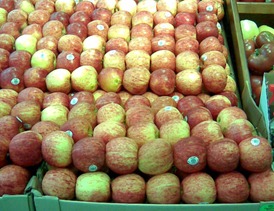 I’ve never been bothered by finding a worm in an apple (actually, finding half a worm would concern me more…). These days, when every fruit in the supermarket is perfect and nearly identical, I kind of miss knowing that the apple I’m about to eat has been found fit for consumption by another creature. I’m bugged more worrying what it is they spray on those fruits and if washing really takes it off.